
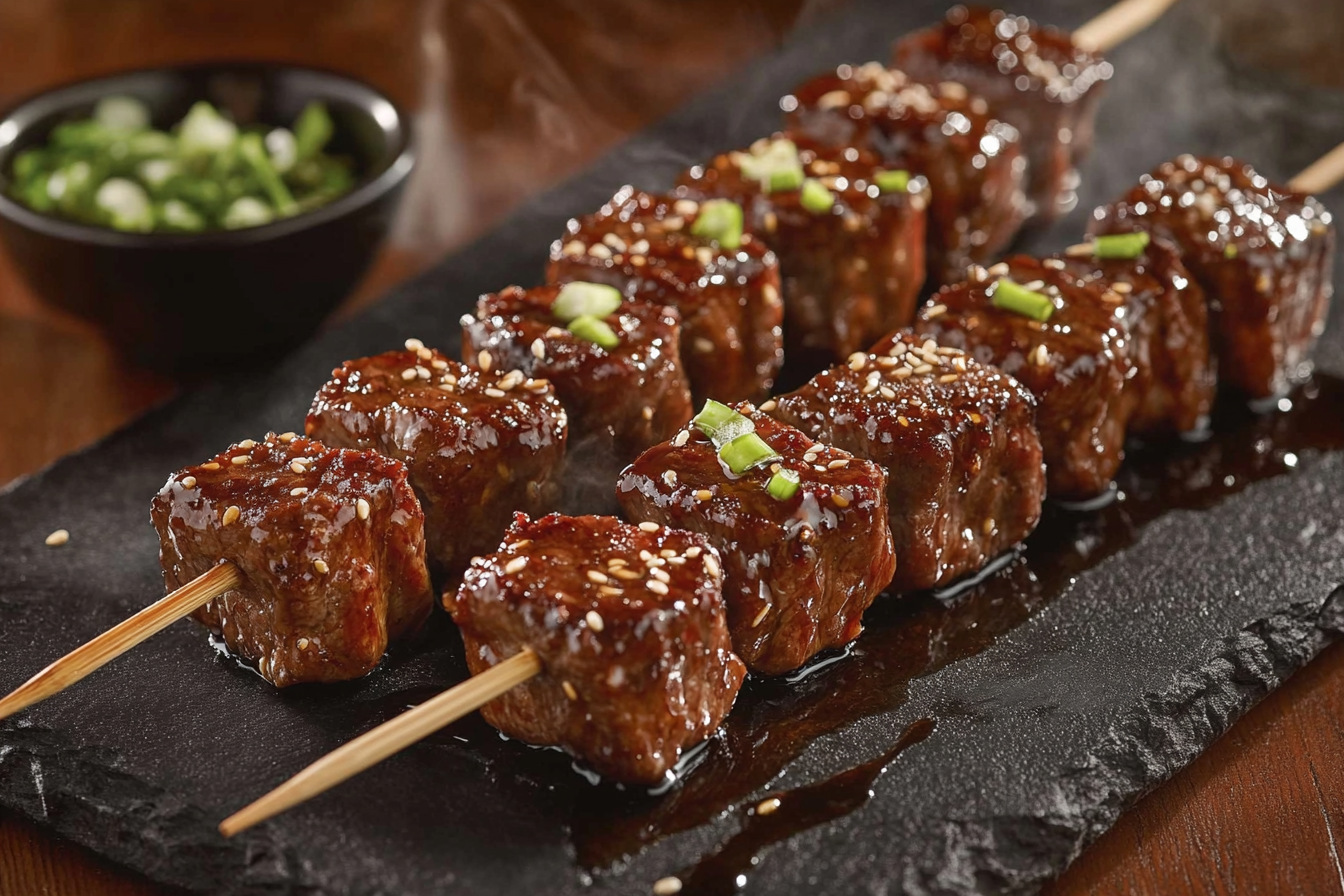
Mini Teriyaki Beef Skewers with Sesame Seeds are built for the kind of cooking where a few precise choices create a noticeably better bite. Cut the beef evenly, give it enough time in the marinade, leave room on the skewer, and you get tender beef with glossy teriyaki flavor and properly browned edges.
This is fast cooking, which means there is nowhere for sloppy prep to hide. The beef pieces should be close to the same size so they finish together, and the skewers should not be packed so tightly that the meat steams against itself. The teriyaki glaze also needs good timing: put a sugar-heavy sauce over fierce heat too early and caramelization can become scorching before the beef is ready.
What makes these especially useful as an appetizer is that most of the work can happen before anyone arrives. The beef can be cut and marinated ahead, the glaze can be prepared, and the skewers can be assembled before cooking. Then all that is left is a short trip over high heat, a final brush of sauce, and a scattering of sesame seeds.
The Heart of Mini Teriyaki Beef Skewers with Sesame Seeds
These skewers sit in a useful space between casual finger food and something polished enough to anchor an appetizer platter. They are small, easy to pick up, and familiar in flavor, but the browned beef and lacquered surface give them more presence than a simple bite of meat brushed with bottled sauce.
I cut the beef into evenly sized, bite-sized pieces because these skewers cook too quickly to compensate for major differences in size. One oversized cube next to two smaller ones creates an immediate problem: either the large piece is underdone or the smaller pieces become dry while you wait for it.
I also give the beef actual time in the marinade. Teriyaki should not taste like a sweet coating sitting separately on top of the meat. Soy, mirin, ginger, garlic, and sesame need time against the surface of the beef so the finished bite tastes seasoned before the final glaze ever touches it.
The other detail I pay attention to is space. I do not pack the skewers tightly. Leaving a little room between the pieces allows heat to reach more of the beef, and that gives me the browned, slightly caramelized edges that make these worth serving.
What Makes This Dish Work
Top sirloin is a strong choice here because it gives you a good balance of tenderness and structure. You want beef that can handle high heat without turning mushy in the marinade, but it also needs to stay tender during such a short cook. Cut it into roughly 3/4-inch cubes and trim away large seams of exterior fat or tough connective tissue before marinating.
The teriyaki base gets its salt and savory depth from low-sodium soy sauce, while mirin and brown sugar supply sweetness and help create that glossy caramelized finish. Rice vinegar keeps the sweetness from feeling heavy. There is only enough acid to sharpen the sauce; this is not an aggressively acidic marinade designed to tenderize the meat.
Fresh ginger and garlic matter because the skewers spend so little time over the heat. Their aroma should still be clear in the finished glaze. Toasted sesame oil is used with restraint because it is powerful; a couple of teaspoons are enough to bring roasted sesame character without making the sauce taste oily.
The cornstarch belongs in the finishing glaze, not the marinade. It gives the reserved teriyaki mixture just enough body to cling to the beef instead of running straight through the grill. Sesame seeds go on after cooking because that is when they remain distinct rather than disappearing into the dark glaze.
Quick Substitution Guide
- Use strip steak in place of top sirloin if you want a slightly richer bite.
- Use tamari in place of soy sauce when appropriate for your needs, checking the label because salt levels vary.
- If mirin is unavailable, use a mild sweet cooking wine or a small amount of additional sugar with water, though the flavor will be less rounded.
- White sesame seeds, black sesame seeds, or a mixture of both will work for the finish.
How to Make the Skewers Without Losing the Beef to the Glaze
Cut First, Then Build the Marinade
Start by cutting the sirloin into even 3/4-inch cubes. This is not a place where exact geometry matters, but consistency does. Line up a few pieces after cutting; if one looks dramatically larger than its neighbors, trim it before it goes into the bowl.
Whisk the soy sauce, mirin, brown sugar, rice vinegar, toasted sesame oil, ginger, and garlic together. The sugar does not need to vanish completely, but give the mixture enough whisking that you no longer have a heavy layer sitting on the bottom.
Before the raw beef enters the bowl, remove 1/3 cup of the marinade and refrigerate it separately. That portion becomes the finishing glaze. Keeping it separate means there is no need to bring a raw-meat marinade back into the process later.
Give the Beef Time, but Not Forever
Add the beef to the remaining marinade and turn everything until every piece is coated. Refrigerate it for at least 1 hour and up to about 4 hours. That window gives the soy, aromatics, and sweetness time to season the surface without letting a salty marinade dominate the meat.
If you are using bamboo skewers, soak them while the beef marinates. When you are ready to assemble, lift the beef from the marinade and let the excess drip away. You want the meat seasoned and moist, not carrying enough liquid to flood the hot cooking surface.
Thread Loosely
Thread three pieces onto each mini skewer and leave a small gap between them. The beef should not be sliding around, but the cubes also should not be compressed into one solid block.
That space changes the cooking. Heat can reach the side walls of each piece, moisture has somewhere to escape, and the surface gets a chance to brown. If the beef is pressed together, those contact points remain pale and steamed.
Thicken the Reserved Glaze
Bring the clean reserved teriyaki mixture to a gentle simmer in a small saucepan. Stir the cornstarch with cold water before whisking it into the hot sauce. Within a minute or two, the sauce should change from thin and splashy to glossy enough that a light coating clings to a spoon.
Do not reduce it into candy. The glaze will tighten slightly as it cools, and it is going onto a hot surface again during the final stage of cooking.
Cook Hot and Watch Closely
Preheat the grill, grill pan, or heavy skillet before the beef touches it. Arrange the skewers in one layer with room between them. Cook for roughly 6 to 8 minutes total, turning every 1 1/2 to 2 minutes so several surfaces get direct contact with the heat.
I keep an eye on these the entire time because teriyaki contains sugar and the pieces are small. There is not much distance between a dark, lacquered edge and a scorched one. Brush the thickened glaze on during the final minute rather than at the beginning, then turn the skewers just long enough to set it.
The beef should remain juicy rather than tightening into chewy little cubes. Use a thermometer when you can; whole-muscle beef should reach 145°F and rest for at least 3 minutes. With pieces this small, begin checking earlier than you think you need to.
Finish After the Heat
Move the skewers to the serving platter and give them one final light brush of glaze. Then add the sesame seeds. I specifically finish with the sesame seeds after cooking because they stay noticeable against the dark glaze instead of becoming buried in it.
Add thinly sliced scallions last. The green onion is not there to disguise the beef under garnish; a light scattering adds freshness and breaks up the richness of the teriyaki.
What to Serve with These Glossy Little Skewers
For a party spread, these work especially well beside foods that are crisp, fresh, or lightly acidic. A cucumber salad, sesame slaw, edamame, or chilled rice-noodle salad keeps the table from leaning too heavily into sweet and savory flavors. If you want to turn the appetizer into a fuller meal, add steamed jasmine rice and simply cooked greens.
For drinks, sparkling water with lime or citrus works because acidity cuts through the glaze. A crisp lager or dry sake also makes sense for an adult gathering. Keep dessert clean and light: citrus sorbet, fresh pineapple, or a restrained ginger cookie gives the palate somewhere different to go after the rich beef.
This is also where the make-ahead advantage matters. I like that I can cut and marinate the beef in advance, assemble the skewers before I need them, and cook them quickly. Once they are on a platter under that shiny glaze with sesame seeds over the top, they read as far more elaborate than the actual workload.
Variations Worth Making
Spicy Chili Teriyaki
Add a small spoonful of chili-garlic sauce or gochujang to the reserved glaze. Start conservatively because the goal is warmth behind the teriyaki, not enough chile to hide the beef, ginger, and sesame.
Pineapple Teriyaki Skewers
Add a small pineapple chunk between the beef pieces, but keep the pieces loose on the skewer. Pineapple brings acidity and sweetness that suit teriyaki naturally, though its extra moisture means the grill needs to be fully hot before the skewers go down.
Extra-Ginger Sesame
Increase the fresh ginger and finish with a mixture of white and black sesame seeds. This version is sharper and more aromatic, which I prefer when the rest of the appetizer table contains rich or fried foods.
Broiled Mini Teriyaki Beef Skewers
No outdoor grill is required. Arrange the skewers on a foil-lined sheet pan and broil them several inches from the heat, turning as they brown. Apply the glaze near the end exactly as you would on the grill; under a broiler, the sugar can scorch even faster, so stay close.
Storage, Reheating & Make-Ahead
The best make-ahead strategy is to do the prep before cooking rather than cook the beef hours in advance. Cut and marinate the beef for 1 to 4 hours, make the reserved glaze, and soak the wooden skewers ahead of time. You can also assemble the skewers and keep them covered and refrigerated until you are ready to cook.
Once cooked, refrigerate leftover skewers promptly in a covered container and use them within 3 to 4 days. I would remove the beef from wooden skewers before storing if space is tight; it also makes reheating more even.
Reheat gently in a covered skillet with a teaspoon or two of water, or use a moderate oven just until the beef is hot. The microwave works in short bursts, but small beef cubes become tough quickly when overheated. For food safety, leftovers should be reheated to 165°F.
You can freeze the cooked beef if necessary, but this is not where the recipe is strongest. The size of the pieces makes them vulnerable to drying during a second heating, so I would choose same-day cooking or refrigerated leftovers over building this appetizer around the freezer.
Using Leftover Mini Teriyaki Beef Skewers with Sesame Seeds
Teriyaki Rice Bowls
Slide the beef from the skewers and warm it gently before serving over rice with cucumber, shredded carrot, scallions, and any remaining glaze. The vegetables keep the bowl crisp while the rice gives the strong teriyaki flavor somewhere to spread.
Beef Lettuce Cups
Chop the leftover beef into smaller pieces and spoon it into crisp lettuce leaves with cucumber and sesame seeds. This is particularly useful when only a few skewers remain because a small amount of beef can become several light portions.
Cold Sesame Noodle Salad
Slice the chilled beef thinly and add it to a cold noodle salad with vegetables and a sesame-forward dressing. Keep the dressing less sweet than the original glaze so the leftover teriyaki beef stays the dominant flavor instead of getting buried under another heavy sauce.
Equipment
- Chef’s knife
- Cutting board
- Medium mixing bowl
- 24 six-inch bamboo or metal appetizer skewers
- Small saucepan
- Grill, grill pan, or heavy cast-iron skillet
- Tongs
- Instant-read thermometer
Ingredients
Beef and Teriyaki Marinade
- 1 1/2 lb top sirloin steak trimmed and cut into even 3/4-inch cubes
- 1/3 cup low-sodium soy sauce
- 1/4 cup mirin
- 2 tbsp light brown sugar packed
- 1 tbsp rice vinegar
- 2 tsp toasted sesame oil
- 2 tsp fresh ginger finely grated
- 2 cloves garlic finely grated or minced
Glaze and Finish
- 2 tsp cornstarch
- 1 tbsp cold water
- 1 tbsp sesame seeds lightly toasted if desired
- 2 scallions thinly sliced

Instructions
Marinate the Beef
- Cut the sirloin into even 3/4-inch cubes. Whisk the soy sauce, mirin, brown sugar, rice vinegar, sesame oil, ginger, and garlic until the sugar begins to dissolve.
- Measure out 1/3 cup of the teriyaki mixture and refrigerate it separately for the glaze. Add the beef to the remaining marinade, toss well, cover, and refrigerate for 1 to 4 hours.
- If using bamboo skewers, soak them in water for at least 30 minutes before cooking. Drain the beef well, then thread 3 pieces onto each mini skewer, leaving a little space between the pieces so heat can reach the sides.
Make the Glaze
- Pour the reserved 1/3 cup teriyaki mixture into a small saucepan and bring it to a gentle simmer. Stir the cornstarch and cold water together, whisk the slurry into the sauce, and simmer for 1 to 2 minutes until glossy and lightly thickened.
Cook and Finish
- Preheat a grill or grill pan over medium-high to high heat. Arrange the skewers in a single layer without crowding and cook for 6 to 8 minutes total, turning every 1 1/2 to 2 minutes so the beef browns on several sides. Begin checking early because the small pieces cook quickly.
- During the final minute, brush the skewers lightly with the thickened glaze and turn just long enough to set the glaze without scorching the sugar. For food-safety guidance, whole-muscle beef should reach 145°F and rest for at least 3 minutes.
- Transfer the skewers to a platter, brush with a final light coat of glaze, and sprinkle with sesame seeds and scallions after cooking. Serve warm.
Notes
Chefts's Notes
- Cut the beef as evenly as possible. On mini skewers, a difference of even 1/4 inch can mean one piece is done before the next.
- Give the beef at least 1 hour in the marinade, but keep it to about 4 hours with this soy-forward mixture so the seasoning stays balanced.
- Leave a small gap between beef pieces on each skewer. Tight packing traps steam and works against the browned edges you want.
- Let excess marinade drip from the beef before it hits the heat. Too much liquid cools the cooking surface and delays browning.
- Brush on the thickened teriyaki glaze near the end of cooking. The sugar caramelizes quickly and can turn from glossy to scorched in very little time.
- Add the sesame seeds after the skewers come off the heat so they stay visible and keep their texture.
Nutrition
Questions I Get About Mini Teriyaki Beef Skewers
What cut of beef is best for teriyaki skewers?
Top sirloin is my default because it is tender enough for fast cooking but firm enough to stay neatly on a skewer. Strip steak also works well if you want a richer cut.
How long should you marinate beef for teriyaki skewers?
For this soy-forward marinade, 1 to 4 hours is a useful window. That gives the seasonings time to work without leaving the small pieces sitting in salty marinade longer than they need.
How do you keep beef skewers from drying out?
Cut the pieces evenly, use high heat, and start checking them early. Small pieces cook much faster than full steaks, so a few extra minutes can make a very noticeable difference in tenderness.
Can you make beef skewers ahead of time?
Yes. Cut and marinate the beef, prepare the glaze, and assemble the skewers ahead of cooking, then keep everything refrigerated. For the best texture, cook them close to serving time rather than reheating an entire batch later.
Do you have to soak wooden skewers before grilling?
Soaking bamboo skewers for at least 30 minutes helps reduce scorching over direct heat. With short appetizer skewers, it is also useful to keep any exposed handles away from the hottest part of the grill when possible.
Can you cook teriyaki beef skewers in the oven?
Yes. The broiler is the better choice because it gives you concentrated heat and faster browning than ordinary baking. Turn the skewers as they color and save the sugary glaze for the final stage so it does not burn.
When should you put teriyaki sauce on beef skewers?
Use the thinner mixture as a marinade, then apply the thickened finishing glaze near the end of cooking. That timing gives the sauce enough heat to become sticky and glossy without exposing its sugar to high heat for the entire cooking time.
Small Skewers, Precise Cooking, Better Results
Mini appetizers reward attention because every piece is exposed. When the beef is cut evenly, marinated properly, and given room to brown, those small details show up in every bite. The glaze should taste integrated rather than pasted on, and the beef should stay juicy beneath its caramelized edges. Save the thick glaze until late, keep the heat high, and do not walk away once the skewers start cooking.
That is what makes Mini Teriyaki Beef Skewers with Sesame Seeds such a useful party recipe. Most of the work can be organized before serving, while the final cooking takes only a few focused minutes. The sesame seeds remain visible, the scallions keep the platter fresh, and the glossy beef looks deliberate without demanding an elaborate finishing routine. Thank you for cooking with me. Make the platter, watch those edges closely, and come back and tell me how they turned out.